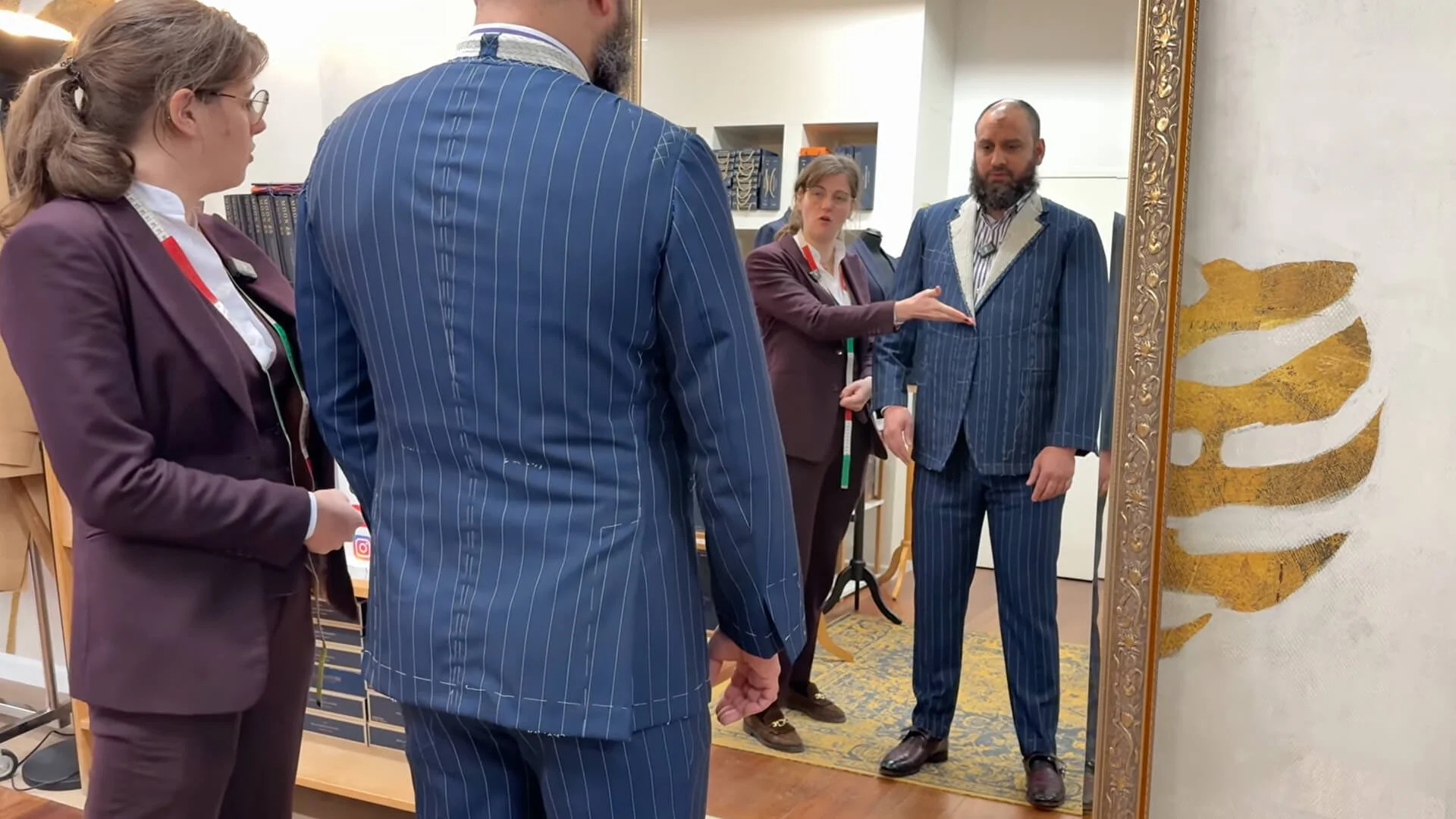
The Baste Fit
The differentiator between a good
&
great fit
Introduction
In a world where “tailor made” increasingly means: “we take your measurements and modify a standard pattern,” the baste fit has almost disappeared.
Too expensive. Too time-consuming. “No longer necessary with modern techniques.”
But for anyone who truly understands what bespoke tailoring means, the baste fit is not optional. It is the moment when a suit transforms from a collection of patterns and cloth into a garment built around your unique body.
In this article, I take you through my own baste fitting — not as an expert, but as a client with a challenging body: a stomach, uneven shoulders, and a specific arm rotation.
Amy, our tailor, explains what she sees, why she corrects, and how she makes my body perform at its best inside a suit.
What Is a Baste Fit?
The Basics
A baste fit is an intermediate fitting where your suit has already been cut from the final cloth, but is not yet permanently sewn. Everything is temporarily assembled by hand using basting stitches — loose stitches that can be completely undone.
The suit has shape. The suit is assembled. But nothing is fixed.
Why “Baste”?
The word comes from basting: temporary stitching.
Within the trade, “baste fit” has become the accepted term for this traditional, fundamental method.
In this video you will see a full baste fitting of a suit.
The Difference Between Fitting Methods
Toile Fitting
Some tailors work with a prototype made from cotton or muslin. This helps refine the pattern, but that cloth behaves nothing like the Super 150’s wool of your final suit.
Direct Finishing
Other makers skip the baste fitting entirely. They cut, sew the suit closed, and hope it fits. When it doesn’t, the options are severely limited.
Custom
A standard pattern is adjusted based on measurements. No true fitting stage. No individual construction.
The Baste Fit
With a baste fit we work in your actual cloth, with maximum freedom to change everything:
Suit construction
Front-to-back balance
Shoulder lines
Armhole & sleeve rotation
Chest and waist shaping
Asymmetries
“ It is the difference between test-driving a VW when you plan to buy a Mercedes, and test-driving the actual Mercedes that will become yours.”
Why Almost No One Does This Anymore
Time Is Money
A baste fit requires hours of work: cutting, basting, fitting, dismantling, altering, rebasting, fitting again. Those hours come straight out of the profit margin.
Craft Knowledge Is Rare
Reading a suit requires years of experience:
Where does a wrinkle originate?
Is the problem in the shoulder, chest, or rib cage?
What causes this tension?
How does one correction affect the rest?
This knowledge is not learned from books.
The Market (Seemingly) Doesn’t Ask For It
Most clients do not even know a baste fit exists. Yet it is the difference between “reasonably fitting” and perfectly fitting.
My Body: Why the Baste Fit Was Essential
The Stomach
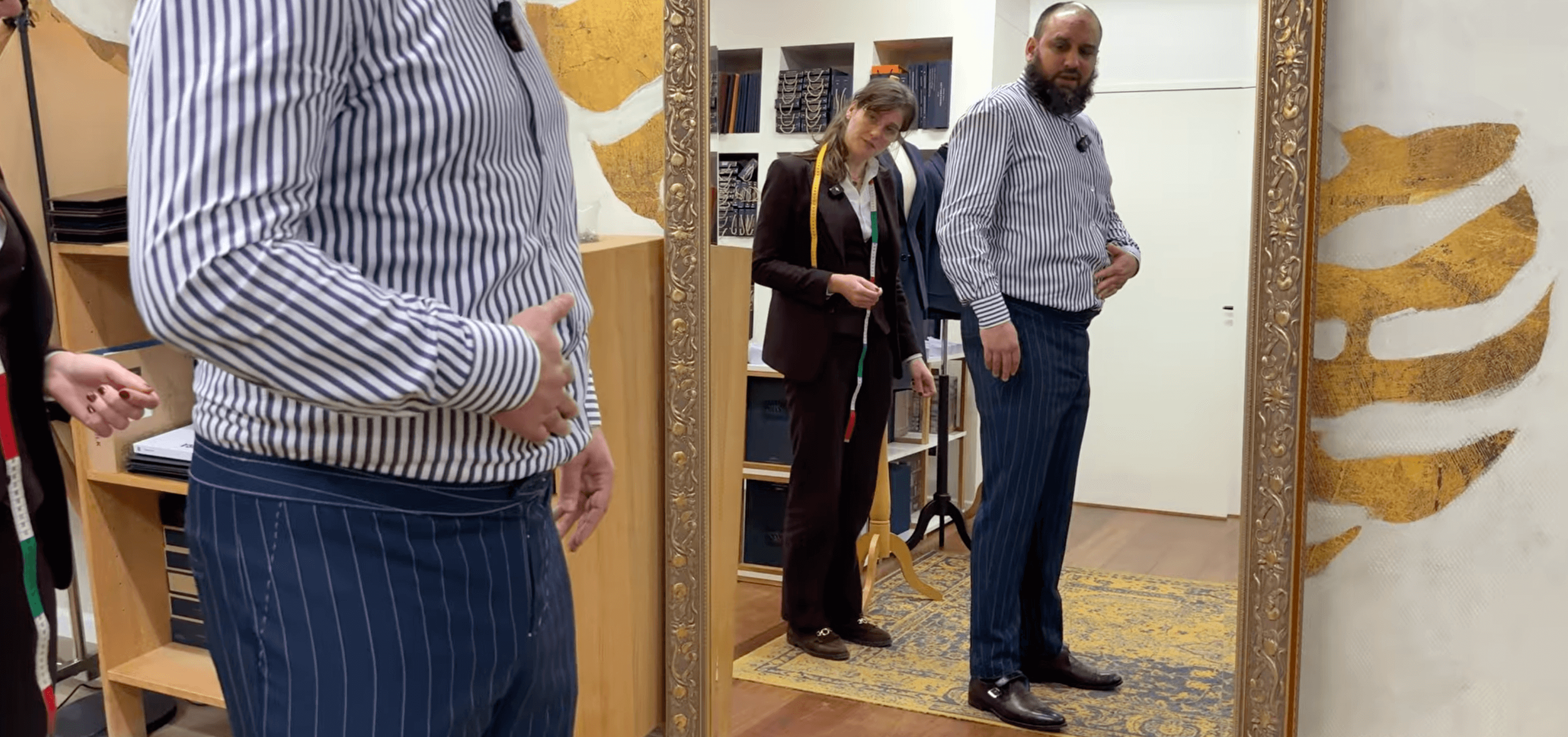
A belly changes the entire construction: balance, length, side seam, darts, button tension.
Amy corrects this during the baste fit by giving the back more room, reducing drag lines toward the stomach.
Uneven Shoulders
My right shoulder hangs lower. This is visible especially under the collar and across the shoulder — a slight hollow in the cloth.
Amy redistributes the cloth over the shoulder by releasing the collar and shifting the balance upward until the issue disappears.
Arm Position
My left arm rotates forward, creating uneven sleeve length. This also affects how much shirt shows at the thumb versus the little finger.
We correct the sleeve length by adjusting it precisely to the arm’s natural position.
The Process: 41 Minutes in the Mirror
Getting dressed.
The first look.
Analysis of shoulders, stomach, and arms.
Details: collar, lapels, length, buttons, tension.
The moment when the suit begins to work with me instead of against me.
This is not magic. This is craft.
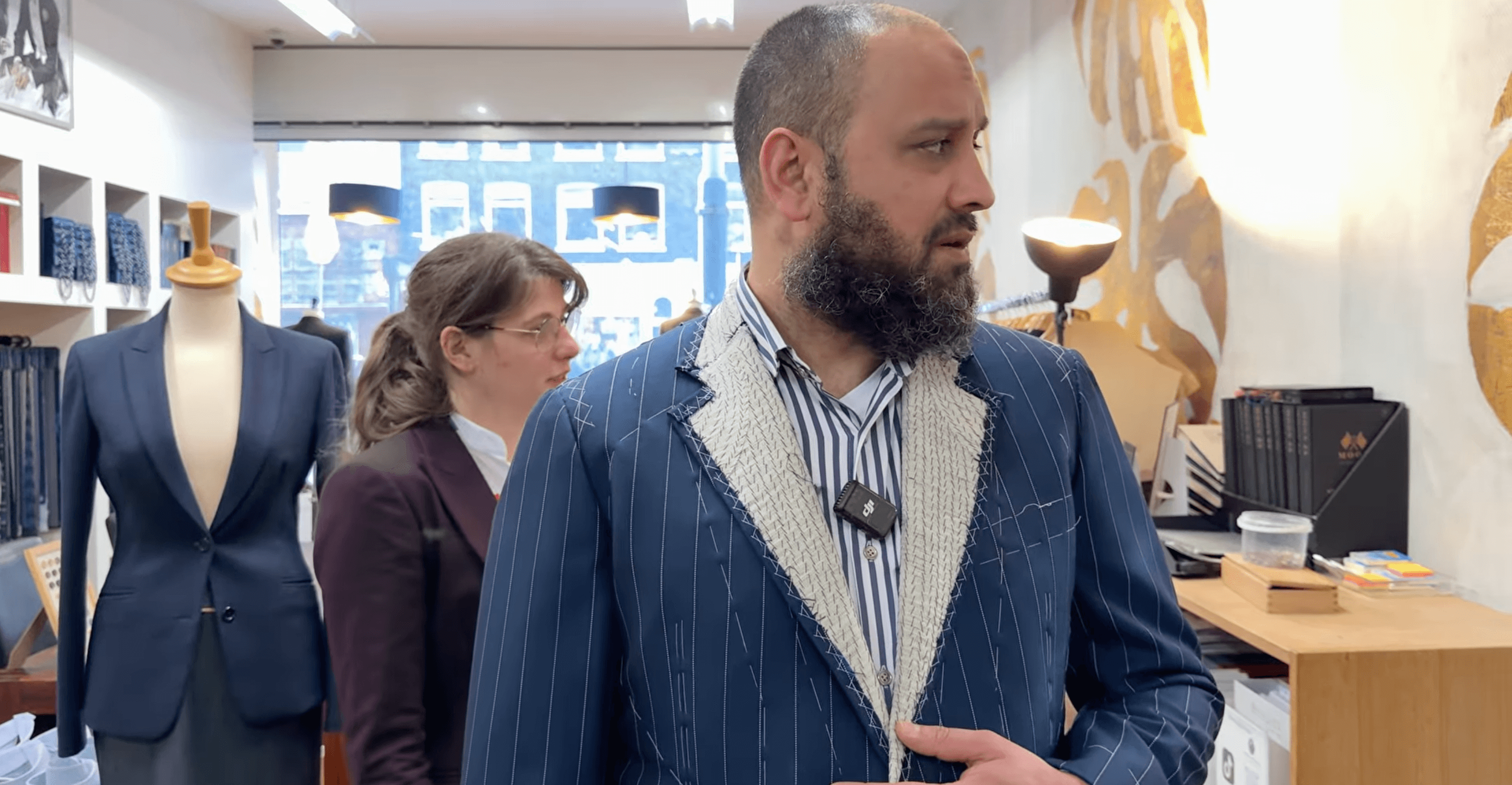
After the Baste Fit
Dismantling
Pattern corrections
Re-basting
Second fitting / Final construction
Millimeters make the difference between good and exceptional.
Why This Matters
Bespoke is not a product. It is a process.
True bespoke tailoring means:
Building around your body
Respecting every asymmetry
Investing time
Applying craftsmanship
“ Quality demands time. Craft demands patience. True fit demands commitment.”
Final Thoughts
The baste fit is not outdated. It is timeless.
Not inefficient. But the only way to truly understand how a suit should fit a unique body.
My 41 minutes in the mirror were not a delay. They were an investment.
Because my body is unique — just like yours. Because craftsmanship matters. Because some things simply cannot be rushed.
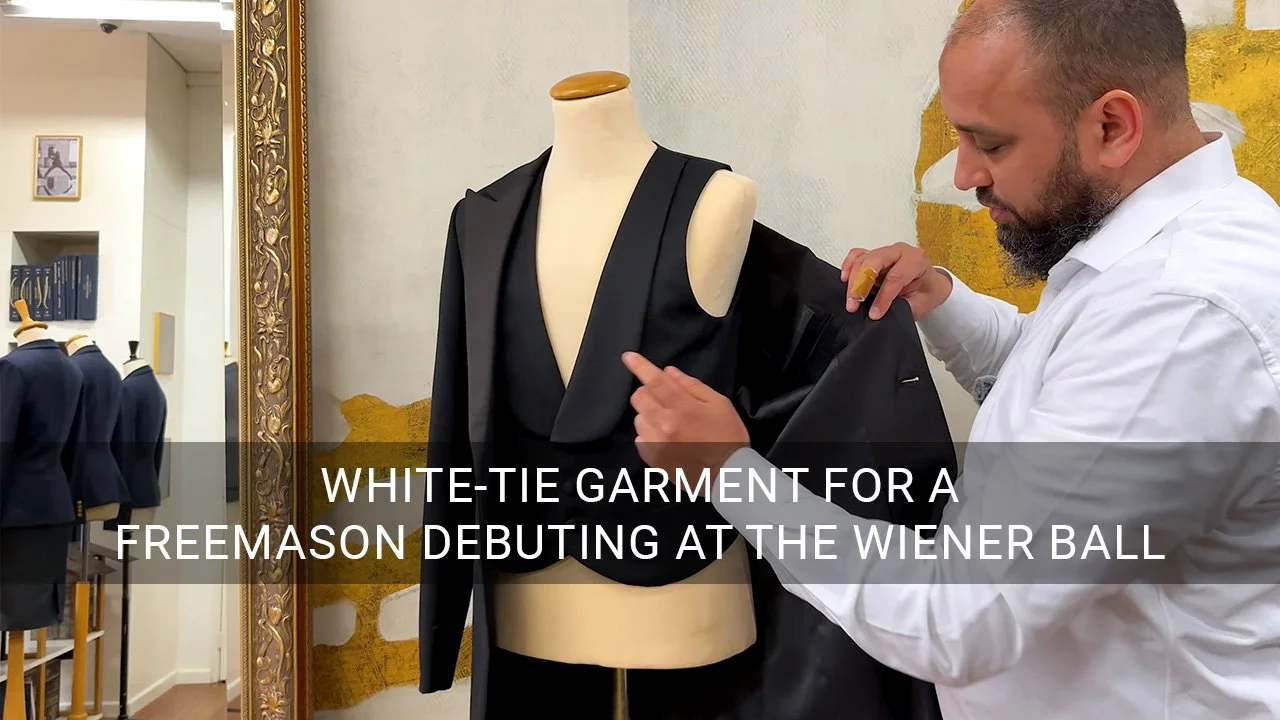
White-Tie Outfit for a Freemason Debuting at the Wiener Ball
For a Thai gentleman making his debut at the Wiener Ball in Vienna, we created a fully bespoke three-piece suit made to measure. A commission that demanded precision at every level, because the Wiener Ball is not just any gala evening. It is one of the most formal and most iconic balls in the world, where the dress code is taken seriously and every detail counts.
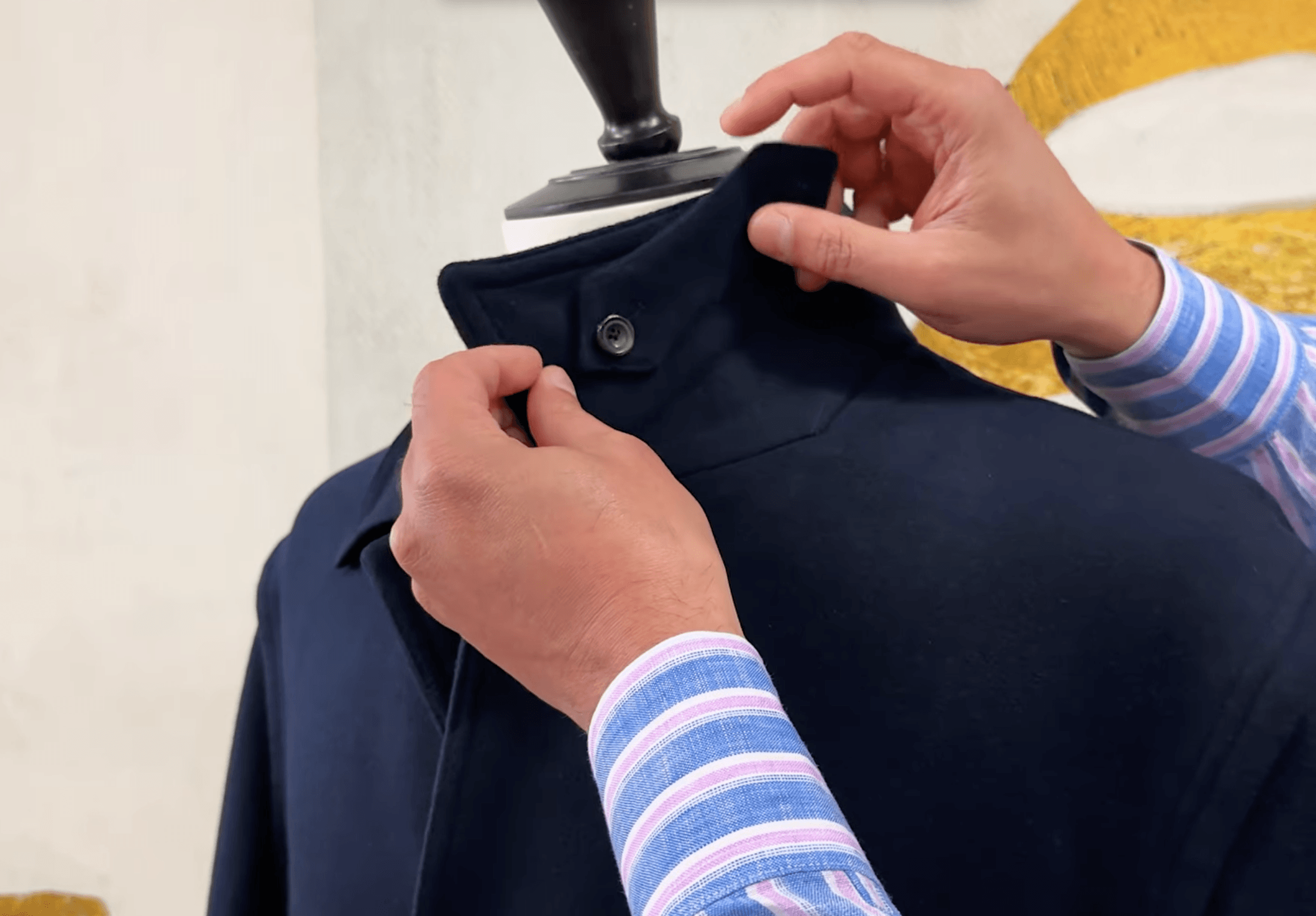
Do you dress yourself, or do you buy clothes?
In our atelier we regularly receive requests to copy items. These are often garments that people have owned for years and that are no longer available in stores. You notice that a lot of quality clothing that used to be readily available in retail simply no longer exists. This is because quality products require a great deal of time, money and expertise.
Unfortunately we must conclude that we live in a zeitgeist where it is no longer about dressing people but simply about selling textiles with a whole lot of marketing. The result: poorly made and fitting clothing at a far too high price.
In this video you see how it can also be done, after years of wearing a jacket, we copy it (simply) so that the favourite garment can often be realised with improvements, gained through the progressive insight that comes from years of wearing it.
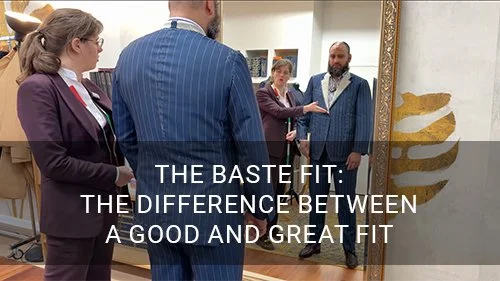
Introduction
In a world where “tailor made” increasingly means: “we take your measurements and modify a standard pattern,” the baste fit has almost disappeared.
Too expensive. Too time-consuming. “No longer necessary with modern techniques.”
But for anyone who truly understands what bespoke tailoring means, the baste fit is not optional. It is the moment when a suit transforms from a collection of patterns and cloth into a garment built around your unique body.
In this article, I take you through my own baste fitting — not as an expert, but as a client with a challenging body: a stomach, uneven shoulders, and a specific arm rotation.
Amy, our tailor, explains what she sees, why she corrects, and how she makes my body perform at its best inside a suit.
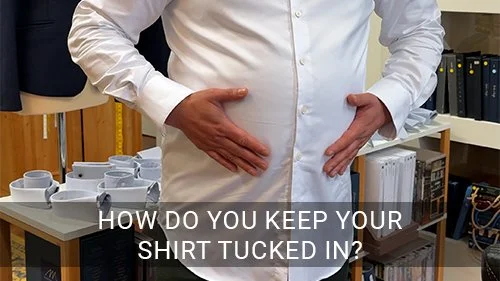
Nothing is more frustrating than a shirt that keeps coming out of your trousers. Whether you are sitting, walking, or standing up, a messy shirt is something you want to avoid.
In this short blog and video, we explain how to keep your shirt neatly tucked in without sacrificing comfort.
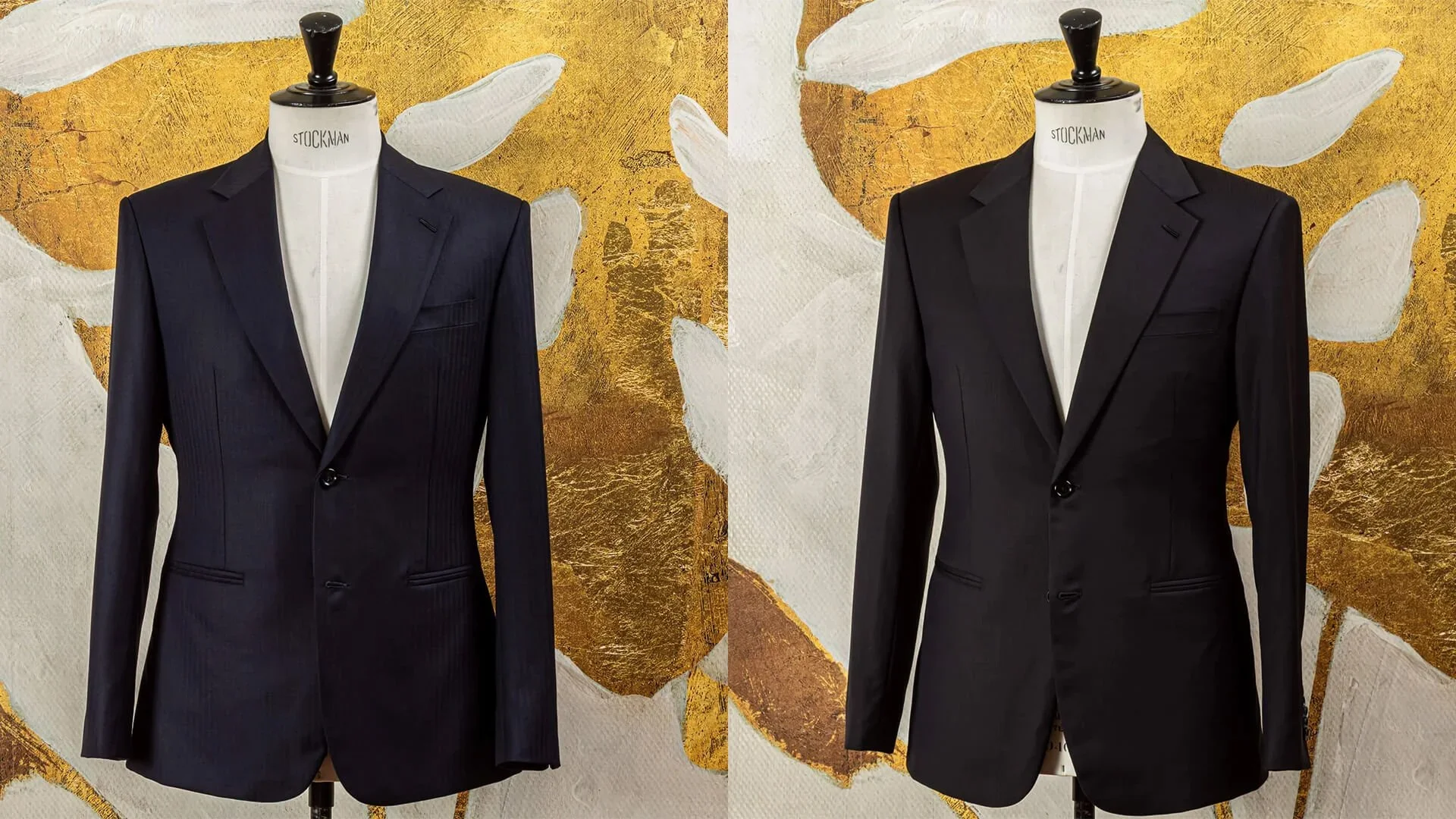
Super 150s: The Story Behind the Fabric
Why a Super 150s suit is not what you think - and how to make the right choice for your professional life
Laurens-Jan's Choice: Two Suits, Two Worlds
Laurens-Jan works at Optiver, one of the world's leading high-frequency trading and market making firms. In his role, everything revolves around client contact - meetings with institutional investors, dinners with traders, moments when millions of euros in decisions are made about futures and options.
In that world, trust is everything. And trust begins in those first three seconds when you enter a room.
"My clients work with the most sophisticated financial instruments. They expect precision, reliability, professionalism at the highest level. If I didn't look like I understand that, why would they trust me with their portfolio?"
But here comes the challenge: in the world of equities and futures trading, everything happens fast. Meetings follow one another. You jump from office to restaurant to client dinner. Your suit must perform without you constantly thinking about it. It must be ready for action, always.
"I can't think every morning about whether my suit is going to hold up today. It just has to work. Think of it like silverware - it should be of such quality that you simply use it, without worry, and it remains perfect for years."
That's why he didn't choose one suit, but two very different Super 150s suits. Luxury that is reliable. Softness and durability. The best of both worlds.

The shoulder line of a suit or jacket is one of the most defining elements of its appearance and fit. A subtle difference in construction can make a jacket look structured and formal or relaxed and natural. That’s why choosing a shoulder style is essential for anyone investing in a bespoke suit.
In bespoke tailoring, everything revolves around the balance between comfort, style, and the desired look. The way a shoulder is constructed influences not only the appearance of a suit but also how it feels and how it accentuates the wearer’s body shape. In this article, we discuss three commonly used shoulder styles: the Classic Shoulder, the Rope Shoulder, and the Spalla Camicia. We explain how they are constructed, what kind of look they create, and which styles or body types they suit best.

Off-White and Lightweight: A Bespoke Suit for a Summer Beach Wedding
An off-white suit may appear simple at first glance, yet wearing it well, especially at a summer beach wedding, requires the right balance of fabric, construction and proportion.
This bespoke double-breasted suit was designed to be light, functional and refined, perfectly suited to the warm, bright and breezy conditions of a summer wedding by the sea.
At De Oost Bespoke Tailoring, we do not see a summer suit as seasonal clothing but as a thoughtful balance between coolness, comfort, mobility and aesthetics. Every detail serves a purpose.

Tweed, Technique and Textiles: A Bespoke Jacket Drawn From Three Tailoring Traditions
When people think of a tweed jacket, they often think of England. But this bespoke piece is not a reproduction of a British classic. It is the result of a deliberate translation of tradition into a contemporary, wearable solution — shaped through the Bespoke Tailoring method we use at De Oost.
Combining English fabrics, Italian techniques and influences from around the world is not a style statement, but a natural outcome of our core principle: creating the best possible garment for the specific client in front of us. Every choice has a purpose. Every technique has a reason.


What is a loden coat?
A loden coat is a long overcoat traditionally made from tightly woven and felted wool known as loden. Due to its specific finishing process, the fabric becomes naturally wind-resistant, water-repellent thanks to lanolin, and exceptionally durable. The cut is generous, allowing freedom of movement around the shoulders and back, often featuring a back pleat or cape-like shoulder construction. It is a coat born from function, not fashion, and that is precisely what gives the loden coat its understated, almost academic presence.
Origins and history of the loden coat
The loden coat originates from the Alpine regions of Austria and Southern Germany. Shepherds, hunters and landowners relied on this heavy wool coat to withstand rain, wind and cold. Later, it was adopted by the European hunting aristocracy and estate owners as part of their countryside attire during hunting weekends and outdoor gatherings.
From practical garment to discreet luxury
While other coats evolved towards decorative or fashionable expressions, the loden coat stayed true to its roots. Even when refined by noble tailoring houses, it retained its core values: function, material and silence. No shine, no theatrical details – just a coat made to work.

Three dinner jackets, one pair of trousers, and the alchemy of quiet elegance
Some clients have taste, others have vision. When both come together, something rare is possible: clothing that is not only correct, but layered, personal, and surprisingly versatile.
View the galleries directly:
That’s how the conversation started with a calm gentleman, tall and lean, the owner of a biotech investment fund. Not a man of spectacle, but of precision. Not searching for a garment, but for certainty — something that simply feels right, for himself and for the occasion.
We didn’t create just a tuxedo, we created possibilities. Three dinner jackets paired with one classic black trouser, made for fundraisers, formal dinners and receptions. Traditional moments, with room for a modern interpretation of style. A quiet version of formal freedom.

Custom-Made Wool-Cashmere Blazer with Purple Check
A well-tailored blazer combines style, comfort, and character. This handcrafted blazer is made from a wool-cashmere fabric with a subtle grey-toned check pattern, enhanced by a refined purple overcheck. The fabric originates from Italy and offers both a luxurious appearance and surprising versatility: suitable for formal appointments, business settings, and stylish weekend combinations.

For a special occasion, we were commissioned to create a bespoke jacket that goes beyond mere aesthetics. The wearer will don this garment during an official visit by H.M. King Willem-Alexander 🇳🇱, and requested a design that is at once personal, representative, and symbolic.
Fabric as the Starting Point
The fabric is an exclusive design by Dutch designer Aziz Bekkaoui. Bekkaoui is renowned for his layered, culturally resonant designs in which identity, elegance, and social commentary converge. This particular fabric carries that signature: a visually powerful statement, with enough subtlety to allow for refined bespoke tailoring.

A Summer Wedding Suit in Balance: Bespoke Blue Wool and Linen
This bespoke three-piece wedding suit was created using a combination that feels both classic and refreshing. The jacket and trousers are made with a lightweight blue wool from the Crispaire collection by Holland & Sherry, while the waistcoat – and the matching bow tie – are crafted from a tan herringbone linen by Huddersfield Fine Worsteds. Together, they form a harmonious ensemble that looks elegant without being stiff, and is perfectly suited for a summer wedding.

A Three-Piece Summer Wedding Suit: Clean, Breathable, and Versatile
For this client, we developed a three-piece wedding suit that radiates calmness, clarity, and structure. The suit is made from a Blue Contrast Solid fabric from the Crispaire collection by Holland & Sherry, woven from 100% wool with a weight of 280 grams. Due to the open weave structure, the fabric is particularly well-suited for warmer weather: lightweight, breathable, and crease-resistant. Ideal for a summer wedding — and still wearable for years to come in business or formal settings.

Heavy tweed for the outdoors
For this bespoke combination, we selected a light brown tweed with a windowpane pattern, woven from 100% wool in a robust 500 grams per meter quality.
The fabric originates from England and comes from the Allsport II collection by Huddersfield Fine Worsteds. This collection is specifically designed for countrywear and is known for its durability, structure, and traditional colour palette.
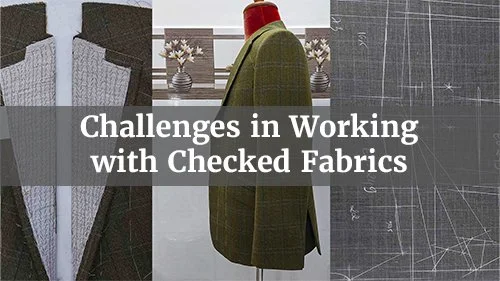
Working with a checked fabric, such as a camel-colored worsted flannel with a check pattern, demands craftsmanship and extra attention from the tailor. Carefully aligning the checks across seams and transitions is essential for a harmonious and professional final result.
Precise Pattern Placement and Cutting
To ensure the checks align perfectly, the pattern pieces must be placed with extreme precision on the fabric. This often means laying the fabric out single-layered rather than folded, giving the tailor full control over the placement of the pattern on the cloth.

More than appearance — an inner practice
Bespoke tailoring is not just an external phenomenon. Those who truly engage in the process quickly sense that it touches something deeper. Not the image you project, but how you inhabit your body and sense your own identity. Many spiritual and philosophical traditions touch exactly on this point. In this article, we explore how those teachings resonate with the world of tailoring.

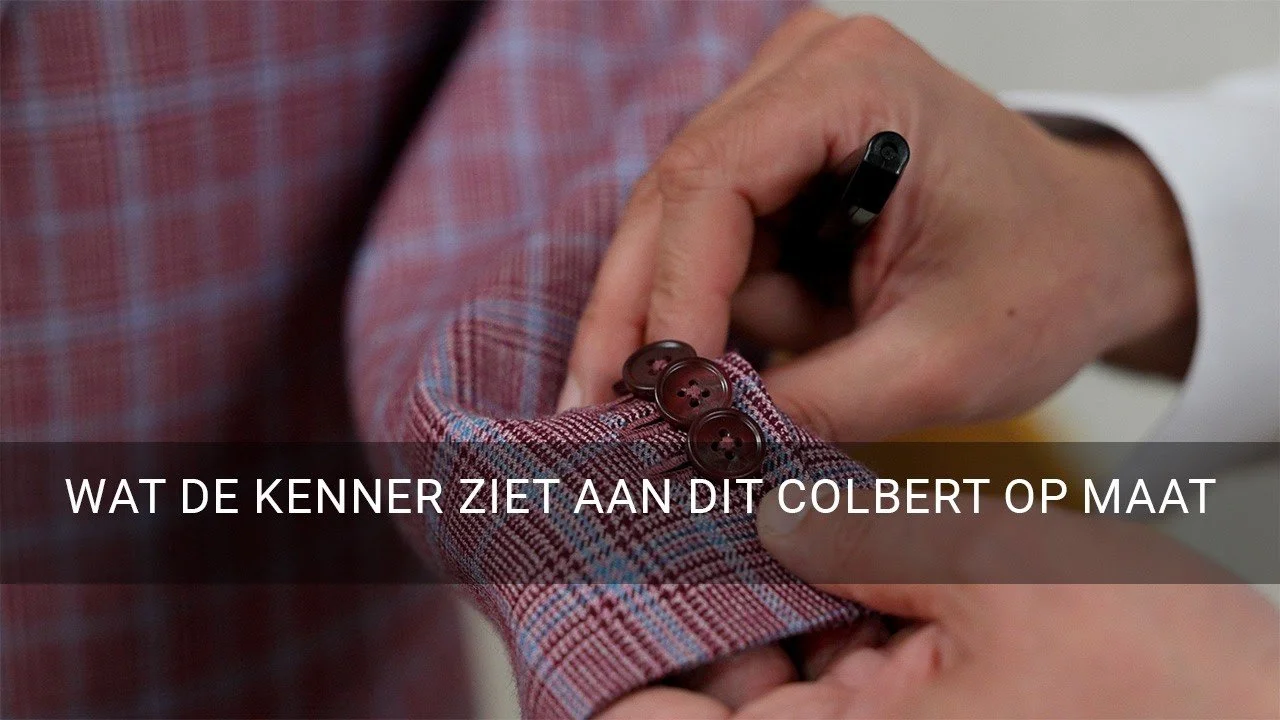
The buttons on a jacket sleeve are more than mere decoration; they tell a story of style, craftsmanship, and tradition.
Below you’ll find a comprehensive guide to the different aspects of sleeve buttons – including their origins, variations, and what they reveal about a jacket’s quality.

Timeless Fabrics, Uniquely Combined
For those seeking a wedding suit with personality, comfort, and a touch of symbolism, this combination offers a remarkable ensemble. This three-piece wedding suit comprises a jacket and trousers made from 300g worsted flannel in a camel check, paired with a 375g blue herringbone linen waistcoat from the renowned Fox Brothers.
The worsted flannel is supple, soft, and extremely comfortable to wear. Many people unfamiliar with fabrics assume that flannel is always warm due to its brushed appearance. However, this is not necessarily true; warmth depends more on the weight and quality of the fabric. A 300-gram fabric is essentially a four-season fabric. Many choose a flannel variant for the lively character of the fabric. The camel check—a subtle plaid in warm sand and camel tones—adds character and a classic British look to the suit. This fabric choice ensures that the suit can be worn not only on the wedding day but also afterward in numerous combinations.

For a recent commission, we created a fully handmade women’s suit consisting of a jacket and skirt, crafted from a characterful tweed fabric from the Sherry Tweed collection by Holland & Sherry. The fabric, a Navy Plum Gun Club Fancy Tweed weighing 340 grams per metre, combines classic patterns with rich colour nuances and provides both the weight and structure required for a feminine silhouette with an elegant drape.

A Double-Breasted Suit in Mid-Brown Glen Check – Stylish, Refined, and Worn with Confidence
A well-tailored suit is more than a piece of clothing: it’s an extension of the wearer’s personality. In this version, the classic double-breasted silhouette is combined with a richly detailed Mid Brown Glen Check. The result is a suit that stands out through stylish refinement rather than loud statements.

Caccioppoli’s New Spring and Summer Fabrics – Light Elegance from Naples for Warm Days
For those who wish to dress with care and style even during spring and summer, the choice of fabric is crucial. In these seasons, the balance in the wardrobe shifts: breathability, lightness, and comfort become more important—without compromising on appearance or refinement. It is precisely in that space that the new spring and summer fabric collection from Caccioppoli Napoli truly excels.

A subtle foundation, with room for a bold accent
For this client, we created a classic three-piece wedding suit based on a clear wish: something eye-catching, yet refined. While the initial idea leaned towards a fully bright-coloured suit, we ultimately arrived at a combination that was more personal, versatile, and balanced – with a calm foundation and a waistcoat as the colour accent.

Formal tailoring in its purest form
A white suit immediately evokes images of evening wear, summer formality, and a touch of Hollywood glamour. But when it comes to a bespoke 4x1 double-breasted suit in white barathea, we’re speaking about something very specific: a garment that balances classical ceremony with modern confidence.

A Classic Double-Breasted Chalk Stripe Suit – Tailored for Character and Contrast
A double-breasted suit always radiates a certain authority, but the choice of fabric and detailing determines whether that expression becomes formal, bold, or refined. For this custom-made suit, we chose a timeless grey-black chalk stripe in 120s wool weighing 310 grams – a fabric from the Target collection by Holland & Sherry, known for its balance of refinement, durability, and comfort.
That’s why it’s a popular choice – whether for a bold double-breasted suit or a more understated version for an accountant.
