There are 3 methods when you need to buy a new suit
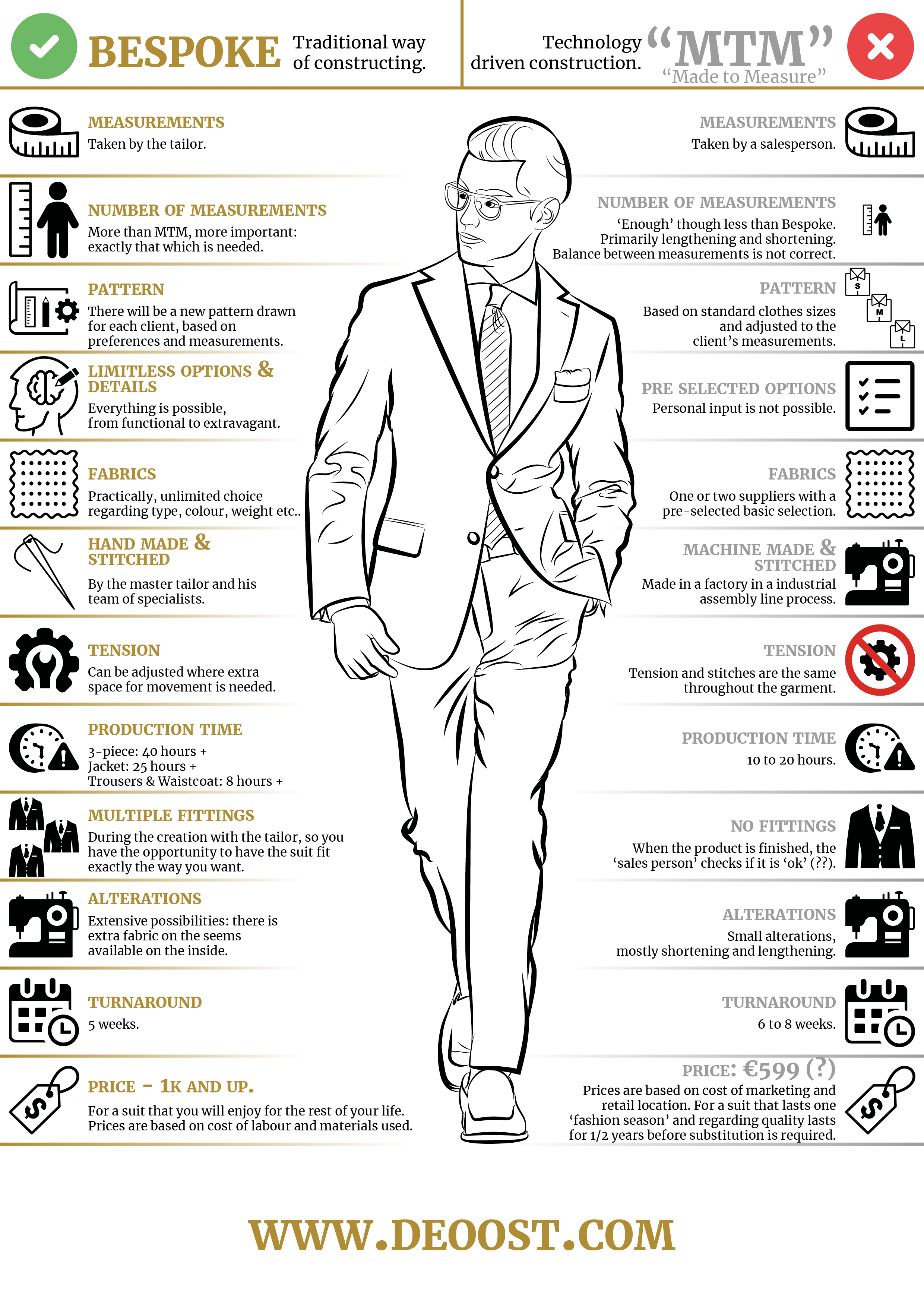
1. RTW = Brands from the peg.
2. MTM = Made to Measure, often promoted and misused as genuine tailored suits. Nowadays the standard for a 'tailored suit'???? Or are you fooling yourself here?
3. Bespoke Tailoring = a suit made by a tailor by hand. All features are purely made for you with your purpose in mind.
Let's call this performance engineering for people who see their appearance as personal branding and don't settle for less. What would work if you want and dare to make a difference and a value of your style? But what are the differences? How does it work? And what does it do for you and your look and feel? Much confusion is created nowadays by all kind of marketing and branding so people can not find the trees in the forest anymore. So a basic understanding of the suit making market and methods is a must for any man taking his dress style serious.
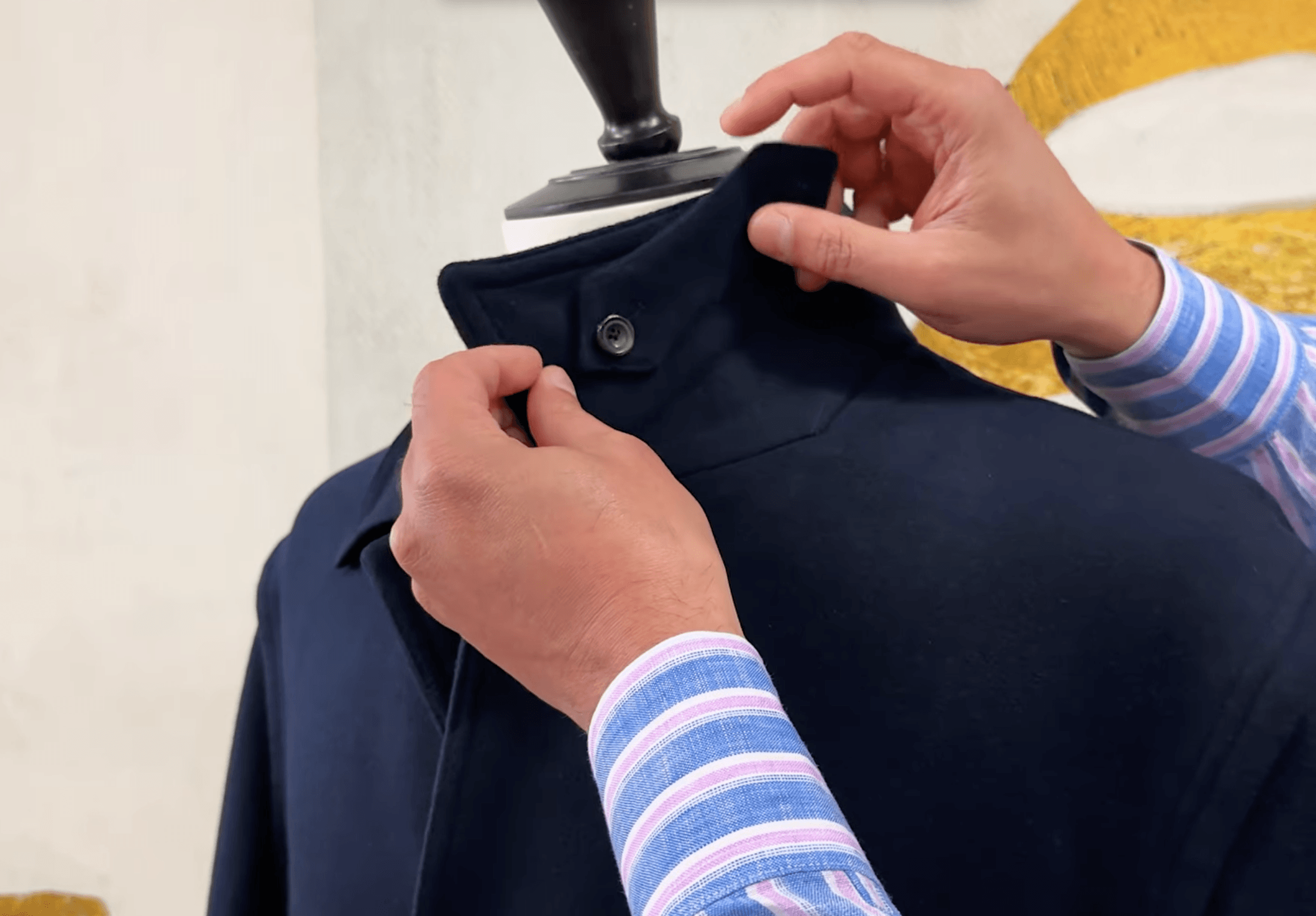
Do you dress yourself, or do you buy clothes?
In our atelier we regularly receive requests to copy items. These are often garments that people have owned for years and that are no longer available in stores. You notice that a lot of quality clothing that used to be readily available in retail simply no longer exists. This is because quality products require a great deal of time, money and expertise.
Unfortunately we must conclude that we live in a zeitgeist where it is no longer about dressing people but simply about selling textiles with a whole lot of marketing. The result: poorly made and fitting clothing at a far too high price.
In this video you see how it can also be done, after years of wearing a jacket, we copy it (simply) so that the favourite garment can often be realised with improvements, gained through the progressive insight that comes from years of wearing it.
Introduction
In a world where “tailor made” increasingly means: “we take your measurements and modify a standard pattern,” the baste fit has almost disappeared.
Too expensive. Too time-consuming. “No longer necessary with modern techniques.”
But for anyone who truly understands what bespoke tailoring means, the baste fit is not optional. It is the moment when a suit transforms from a collection of patterns and cloth into a garment built around your unique body.
In this article, I take you through my own baste fitting — not as an expert, but as a client with a challenging body: a stomach, uneven shoulders, and a specific arm rotation.
Amy, our tailor, explains what she sees, why she corrects, and how she makes my body perform at its best inside a suit.

The shoulder line of a suit or jacket is one of the most defining elements of its appearance and fit. A subtle difference in construction can make a jacket look structured and formal or relaxed and natural. That’s why choosing a shoulder style is essential for anyone investing in a bespoke suit.
In bespoke tailoring, everything revolves around the balance between comfort, style, and the desired look. The way a shoulder is constructed influences not only the appearance of a suit but also how it feels and how it accentuates the wearer’s body shape. In this article, we discuss three commonly used shoulder styles: the Classic Shoulder, the Rope Shoulder, and the Spalla Camicia. We explain how they are constructed, what kind of look they create, and which styles or body types they suit best.
Working with a checked fabric, such as a camel-colored worsted flannel with a check pattern, demands craftsmanship and extra attention from the tailor. Carefully aligning the checks across seams and transitions is essential for a harmonious and professional final result.
Precise Pattern Placement and Cutting
To ensure the checks align perfectly, the pattern pieces must be placed with extreme precision on the fabric. This often means laying the fabric out single-layered rather than folded, giving the tailor full control over the placement of the pattern on the cloth.

The buttons on a jacket sleeve are more than mere decoration; they tell a story of style, craftsmanship, and tradition.
Below you’ll find a comprehensive guide to the different aspects of sleeve buttons – including their origins, variations, and what they reveal about a jacket’s quality.

The construction of a tailored suit is the hidden foundation that determines how your suit looks, how comfortable it feels, and how long it lasts. While the exterior – the fabric and the design – often receives the most attention, the true value of a tailored suit lies in its construction.
In this article, you’ll discover the differences between Full Canvas, Half Canvas, Unlined, and Fused constructions. We’ll delve deeper into the techniques, advantages, and limitations of each method, and how they shape the quality of your suit.
We’ll also guide you through the craftsmanship behind setting the canvas – the heart of a high-quality suit.

In the world of bespoke tailoring, there are many techniques that set a custom-made garment apart from mass-produced clothing. One of these specialized methods is pad stitching — an essential hand-stitching technique that brings structure, shape, and character to tailored pieces. Although it often goes unnoticed once the garment is complete, pad stitching plays a critical role in the fit and feel of a well-made suit, jacket, or coat.

White-Tie Outfit for a Freemason Debuting at the Wiener Ball
For a Thai gentleman making his debut at the Wiener Ball in Vienna, we created a fully bespoke three-piece suit made to measure. A commission that demanded precision at every level, because the Wiener Ball is not just any gala evening. It is one of the most formal and most iconic balls in the world, where the dress code is taken seriously and every detail counts.